
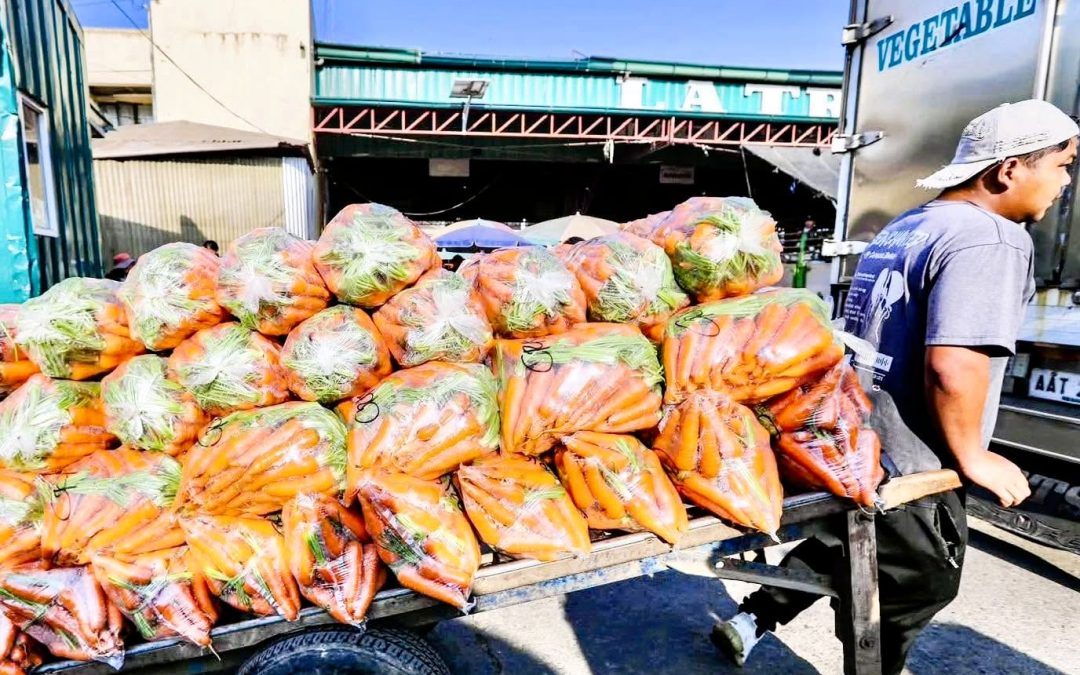
Having affordable food also depends on how efficiently products move through the value chain. 

This is another important idea behind #Agrilink2026’s theme, “Agri Food Hub Facilities: A Boost to Efficiency in the Value and Market Chains.”
Making food more affordable requires more than a good harvest. Agricultural products must also move efficiently through sourcing, procurement, storage, logistics, trading, and distribution before they reach consumers. Each stage plays a role in reducing delays, minimizing costs, and improving market access.
The Department of Agriculture – Philippines and KADIWA program’s “Benteng Bigas, Meron Na!” (P20 Rice Project) reflects this approach. Beyond providing affordable rice, the initiative is supported by coordinated procurement and distribution systems designed to move rice more efficiently from storage facilities to communities while creating an additional market for local rice farmers.
The scale of the initiative highlights the importance of these systems. As of April 2026, the National Food Authority had released around 54,000 metric tons of rice to Food Terminal Inc. to support the program’s rollout. Distribution is carried out through a growing network of 932 selling sites nationwide, with plans to establish 900 additional sites to expand access.
These figures show that efficient value and market chains rely on more than production alone. They depend on connected systems that bring together procurement, storage, logistics, and distribution so agricultural products can reach more communities while continuing to support producers.
At #Agrilink2026, the international agribusiness exhibit will highlight the technologies, facilities, organizations, and partnerships that help strengthen every stage of the value and market chains—from production areas to consumers.
Join us from October 8 to 10 at the World Trade Center, Pasay City for free seminars and free entrance to the exhibition.